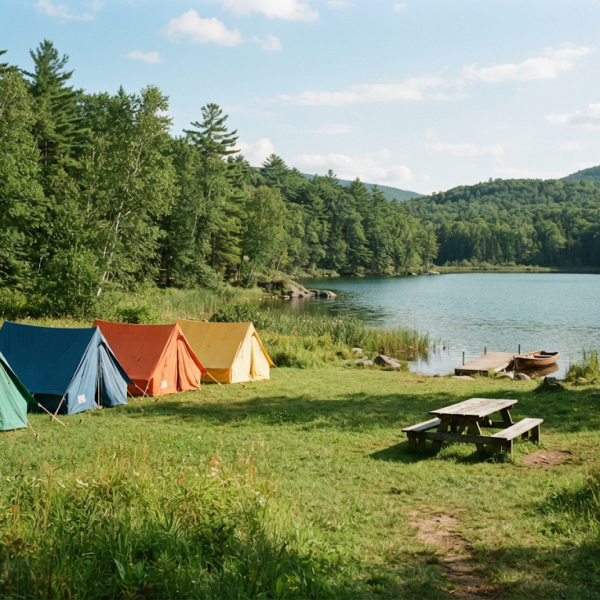
Every summer, camps open their gates to children who want to swim, climb, build fires and make friends for life. For Ukrainian families settled in Britain, Ireland, Canada or Poland, a camp can be a rare week when a child laughs in two languages. But the registration process is another matter. Parents face long forms in English, questions about allergies and medications, rules on photographs and a request to attach papers they may not have at hand. A parent who cannot read the camp form cannot give informed consent, and a camp that cannot read the parent's answers cannot protect the child. This guide explains how camps, schools and community organisations can prepare materials for Ukrainian-speaking families and handle their documents.
Why Camp Paperwork Is Serious
Camp forms collect health information, emergency contacts, permissions and insurance details. They also include rules on behaviour, supervision and pick-up. If a parent mistakes a question about allergies or medication, a staff member may lack the information needed in an emergency. Clear communication in the parent's own language is therefore not a courtesy, it is a safety measure.
The Documents Parents May Need
Depending on the camp and country, parents may need to provide a birth certificate, a vaccination record, a medical report, identity documents, proof of residence or letters from a school. Ukrainian documents differ in format and terminology from British or Canadian ones, and staff may not know how to read them. Ask parents which documents they can supply, and explain which are required and which are optional. Government guidance on child safety and documents, such as that at gov.uk, can help camps define what they need.
Names, Dates and Details
Ukrainian names are often written in Cyrillic and transliterated into Latin letters in different ways. The same child can appear as Oleksandr, Alexander or Aleksandr in different papers. Use the spelling of the passport or birth certificate and note any variants on the form. Dates in Ukraine are written day first, as in many other countries, but check each form for clarity. A mismatch between registration and documents can delay a child's entry into the camp.
Translating Birth and Medical Records
When a camp requests official proof of age or identity, a certified translation of a ukrainian birth certificate translation can be prepared along with a translator's statement of accuracy. For medical documents, work with someone who knows health vocabulary, and keep the translation next to the original. Explain to parents how the documents will be stored and who can see them, in line with privacy rules.
For families whose children are starting school abroad, the same papers are needed again for enrolment, often with a certified translation that the school keeps on file. Professional translation services handle birth certificates, vaccination records and school reports together, so the names and dates match across every document a school or camp receives. Having one provider prepare the whole set avoids the delays that come when each paper is translated separately and the spellings no longer agree.
Forms in Plain Language
Write forms with short questions, one topic at a time. Use examples, such as listing common allergies, and offer a space for notes. Provide parallel versions in English and Ukrainian, with the same numbering, so a staff member can compare answers without reading Ukrainian. Avoid legal jargon wherever possible, and explain terms such as waiver, liability and consent in everyday words. For more on how parents and schools handle multilingual documents, see this article on translation for UK visa applications.
Health, Allergies and Medication
This is the most important section. Ask about allergies, chronic conditions, medicines, dietary needs, previous injuries and fears. Ask how parents want staff to respond in an emergency, and record a phone number where they can be reached. If a child needs medication, explain how it should be labelled, delivered and stored. Review the answers with the parent in person, with an interpreter if needed.
Interpreters and Welcome Day
On arrival day, a bilingual volunteer or interpreter can make a nervous family feel welcome. Prepare a short welcome sheet with the daily schedule, meal times, rules, the names of group leaders and the phone number to call. Show the parent where the child will sleep and where the first aid room is. Even a few words in Ukrainian from the leaders make a difference to a child who feels shy.
Children's Voices and Inclusion
Children who are learning English may feel left out of games and conversations. Prepare picture cards, simple instructions and a buddy system. Encourage activities that do not depend on language, such as sports, crafts and music. Invite children to share songs or games from home, so that the camp becomes richer for everyone.
Photos, Social Media and Privacy
Camps often share photographs. Explain in both languages how images are used, who can see them and how parents can withdraw consent. Ask for permission on a separate line from other permissions, and respect the answer. Remind staff never to post names with photos without clear agreement.
Communication During the Week
Parents worry when they do not hear from their child. Offer a daily update by message or a photo wall, and explain when children are allowed to call. Send short, kind notes in English and Ukrainian about the day. In case of incidents, prepare templates for informing parents quickly and clearly.
After the Camp
Ask parents and children for feedback in both languages, and use it to adjust forms and routines. Keep translated templates, glossaries and policies in a shared folder so that next year's team can reuse them. A camp that welcomes families in their own language gains loyal friends and safer summers, and children go home with stories to tell in two languages.